


Melasma is one of the most emotionally frustrating skin conditions we treat — not because it’s untreatable, but because it’s often misunderstood, mistreated, or rushed.
At Dermology, melasma isn’t approached with a “quick fix” mindset. It’s approached like hair colour maintenance, not a once-off haircut. You don’t bleach dark hair platinum in one sitting and expect it to stay perfect forever — and melasma works the same way. It’s chronic, pigment-cell driven, and requires intelligent long-term management.
What Is Melasma?
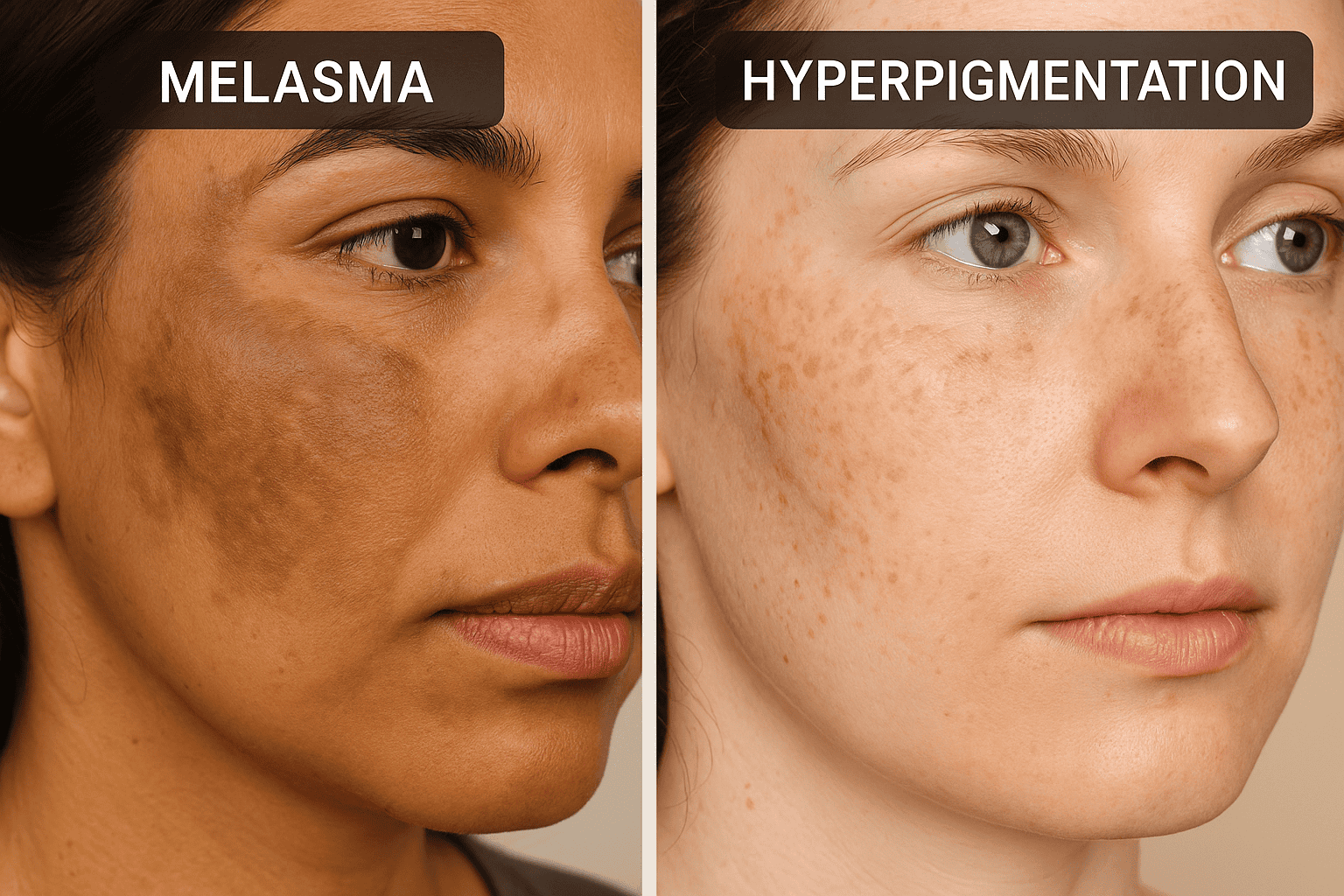
Melasma is a chronic pigment disorder where melanocytes (pigment-producing cells) become overactive and deposit excess melanin in the skin.
It typically appears as:
-
Brown, grey or patchy pigmentation
-
On the cheeks, forehead, upper lip, jawline or temples
-
Often symmetrical
Melasma is not a surface stain. It lives deeper in the skin and is influenced by internal triggers — which is why aggressive treatments often make it worse.
Who Gets Melasma? (Yes, Men Too)
Melasma does not discriminate.
It affects:
-
Women and men
-
All skin types (especially Fitzpatrick III–V)
-
Post-pregnancy patients
-
Patients on oral contraceptives
-
Individuals with genetic predisposition
-
People with high sun or heat exposure
-
Patients with inflammation-triggered pigment
Men may present differently — often on the temples, forehead or cheeks — and are frequently under-diagnosed or treated too late.
The Truth About Melasma: It’s Chronic
Melasma does not get “cured”.
It gets controlled, calmed and maintained.
Think of it like nail care:
-
You don’t do one manicure and expect perfect nails for life
-
You maintain, protect, strengthen and prevent breakage
Melasma requires:
-
Correct diagnosis
-
Safe pigment suppression
-
Barrier repair
-
Heat and inflammation control
-
Ongoing pigment maintenance
This is why protocols matter more than individual treatments.
The Dermology Melasma Philosophy
At Dermology, melasma protocols are:
-
Layered
-
Progressive
-
Customised
-
Experience-driven
-
Evidence-based
We never chase pigment aggressively.
We calm the melanocyte first — then we refine.
Our Preferred Melasma Treatments & Protocols
1. Cosmelan® – Our Gold Standard for Melasma
Cosmelan is our first-line treatment for melasma and has been part of Dermology protocols for over a decade.
Why Cosmelan works:
-
Suppresses tyrosinase (the enzyme responsible for pigment production)
-
Targets melasma at a cellular level
-
Treats existing pigment and prevents new pigment formation
-
Suitable for multiple skin types when correctly prescribed
Cosmelan is not a “peel” — it is a medical depigmentation system that requires expert supervision, strict aftercare and correct candidate selection.
When done correctly, it resets pigment behaviour — not just surface colour.
2. Meline® – Precision Pigment Correction
Meline is used in specific melasma profiles where targeted pigment pathways need addressing.
Ideal for:
-
Epidermal-dominant melasma
-
Localised pigment patterns
-
Maintenance phases post-Cosmelan
Meline allows us to customise depth, strength and pigment focus without overwhelming the skin.
3. PRXPlus – Treating Melasma Without Heat or Trauma
PRXPlus is a Dermology favourite for melasma-prone skins.
Why it’s safe:
-
No heat
-
No peeling trauma
-
No melanocyte stimulation
-
Deep biostimulation without inflammation
PRXPlus improves skin quality, luminosity and collagen without triggering rebound pigment, making it ideal for sensitive melasma patients.
4. Chemical Peels – Used Strategically, Not Aggressively
Chemical peels for melasma are not about strength — they’re about strategy. We offer a wide variety of various superficial chemical peels to safely and effectively manage melasma.
At Dermology, peels are:
-
Superficial
-
Controlled
-
Timed correctly within a protocol
-
Never used when melanocytes are unstable
This prevents post-inflammatory hyperpigmentation and flare-ups.
5. SkinPen® Microneedling – When & Why We Use It
SkinPen is introduced to get the pigment under control.
Benefits in melasma protocols:
-
Improves penetration of depigmenting actives
-
Strengthens the dermal environment
-
Improves texture without heat
6. ClearSilk® – Our Go-To Laser for Melasma
ClearSilk is one of the safest laser technologies for melasma.
Why?
-
It is a non-ablative, non-thermal laser
-
Targets redness, inflammation and vascular triggers
-
Calms heat-induced pigment pathways
-
Improves skin tone without activating melanocytes
ClearSilk treats what fuels melasma, not just what you see on the surface.
7. MOXI™ – Yes, a Laser… Used Carefully & Expertly
MOXI is a laser — and yes, it can be used in melasma when protocols are expertly designed.
At Dermology, MOXI is:
-
Used in select melasma cases only
-
Performed with conservative settings
-
Integrated into stabilised pigment protocols
-
Never used aggressively or prematurely
MOXI helps with:
-
Sun damage
-
Texture
-
Early pigment irregularities
The key is experience. In the right hands, it refines and future-proofs skin safely.
Why Patients Feel Safe at Dermology
Melasma requires restraint, knowledge and long-term vision.
At Dermology:
-
We don’t rush results
-
We don’t chase pigment aggressively
-
We don’t use one-size-fits-all protocols
-
We understand melanocyte behaviour deeply
-
We plan months — not sessions
Your skin is treated like a long-term investment, not a once-off intervention.
Final Word: Melasma Is Managed — Not Fought
Melasma flares when it feels attacked.
It settles when it feels supported.
With the right treatments, correct timing, and experienced hands, melasma can be beautifully controlled, softened and stabilised.
And that is exactly what Dermology does best.
Ready to start your melasma journey safely?
Book a professional skin consultation at Dermology and let your pigment be treated with the respect — and expertise — it deserves.


I have pigmentation on my face from my 4th pregnancy that I’d loke to get removed and keep under control please.